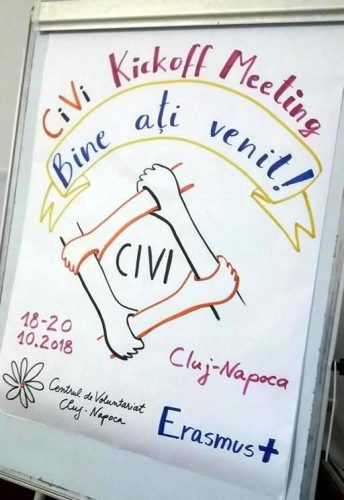
In Romania there are 25 volunteer centers providing the community with similar services, but differently organized, in the field of volunteering. Having this fact as a starting point, Cluj-Napoca Volunteer Center initiated and coordinated the CiVi project – “Trained Coordinators – Involved Volunteers” (“Coordonatori instruiți – Voluntari implicați”).
CVCN
together with other 7 Romanian organizations have decided to merge their
efforts and contribute to the efficiency, diversification and raising the
quality of the programs they offer. This is how CiVi began, with volunteer centers
in Bacău, Baia Mare, Bistrița, Brașov,
Iași, Craiova and with Pro Vobis – National Resource Center for Volunteering.
CiVi started from a series of positive ideas and with a substantial amount of trust in the fact that each volunteer center is valuable in it’s community and this value is worth deepening and expanded.
Our common conclusion is that the volunteer coordinator is the key to a successful volunteer program: if the coordinators are well trained and keep up with the dynamics of their field, the volunteers will be engaged, their needs satisfied and their development process will be supported by the coordinator, and all this contribute to reaching the desired impact in the community.
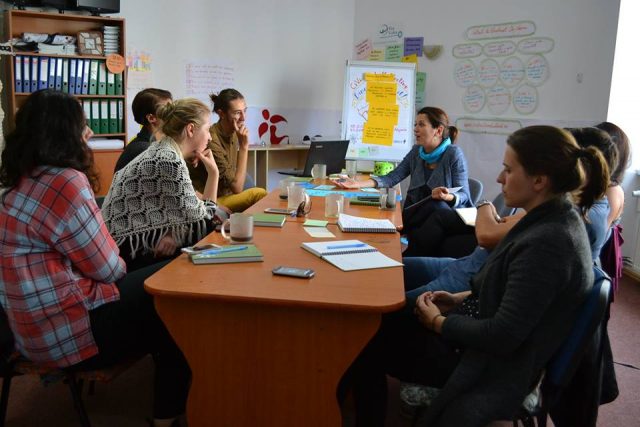
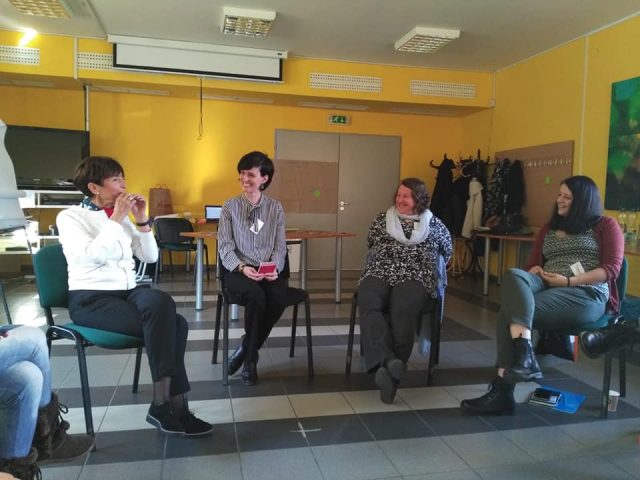
After analyzing the needs of our respective communities and organizations, we have prioritized our own training needs, and identified the fields of senior volunteering, corporate volunteering and facilitation of volunteer trainings. To increase our capacities, we have organized three learning mobilities:
“Training on Senior Volunteering” delivered by
Önkéntes Központ Alapítvány, Volunteering Hungary – Centre of Social
Innovation in
Budapesta, Hungary,
between the 13th and 16th of November, 2018, with the
participation of 8 representatives from 8 volunteer centers;
“Corporate Volunteering” delivered by Slovenska Filantropia,
Lubliana, Slovenia between the 12th and the 16th of February,
2019, with the participation of 5 representatives of the partner volunteer
centers;
“Train the Trainers” delivered by SchipCon Limassol, in Palermo,
Italiy, between the 8th and the 12th of July, 2019, with
the participation of 4 representatives of the partner volunteer centers.
The methodology of
the leaning activities was based on experiential learning, non-formal education
methods, case studies and the sharing of good practice examples. The
participants testimonials are proof of the intense, effective learning process:
Remus, Team for Youth, about the Training on Senior Volunteering: ‘‘ They [the seniors] have the capacity to
offer real value to the activity through their experience (I reached the
conclusion that most senior volunteers are wise people with a clear goal)..
they are more empathetic and sensitive to the issues of the beneficiaries, but
can also offer real feedback without getting lost in details”.
Corina, Pro Vobis, about the Corporate Volunteering Training:‘‘I had the opportunity in Slovenia to be
part of an excellent practical training for the three corporate volunteering
events I was about to coordinate. It was a kind of a step by step guide that we
followed with the colleagues from the other Romanian volunteer centers. During
the 5 training days, I took more than 45 pages of notes and not (only) because
this is the way I am – I like to write the new information and settle the
learning this way – but also because I recognised my professional interest in
about 90% of the training content. This is not something that happens often.
The fact that I had this opportunity through an Erasmus+ project only increases
the joy of taking part in quality, meaningful projects.”
Gabriel,
FSC, about the Training of Trainers:‘‘I had the opportunity to familiarize
myself with new educational systems from Norway, Croatia or UK (…) systems
focused on the individual not on a group. We will surely apply the methods we
learned in training our volunteers.”
These are just a few of the participants thoughts, but gathering all the
testimonials, we can conclude that during the 14 months of CiVi, we managed to:
Develop the coordination
competencies of 17 members of the volunteer centers teams, when it comes to
implementing senior and corporate volunteering and volunteer training in
general.
Develop the strategic
organizational capacity of the 8 partner volunteer centers in three of the
services they offer to the community – promotion, development, training.
Raising awareness in the seven local communities
the partners belong to about the value of senior and corporate volunteering.
The results of the project are visible on different levels. The 17 participants in the mobilities are better equipped to involve employees and seniors in volunteering activities. The members of the partnership have benefited from solid organizational development that is also, hopefully, sustainable. The impact of the project has reached the local communities as well: during the 2019 National Volunteer Week edition, the organized events reached tens of adult and senior beneficiaries, developing new practices of quality involvement of this target group.
The
CiVi project, „CiVi – Coordonatori
instruiți – Voluntari implicați” is co-financed by the European Commission
through Erasmus+ program, in the field of adult education.
Hi! I’m Andreea and you’re about to read about my EVS experience, which started a few days after turning 28 years old.
You see, after working really hard for 10 years, exactly when I got to the burnout point of my career, this project appeared into my life out of nowhere.I took the decision to join it and in only three weeks from the moment when I sent my resume I was here, ready to spend my 2017 in a different country, with people from totally different cultures. I didn’t know what was about to happen and so, thinking about a thousand different scenarios, I came here full of hope. And totally scared.(more…)
CAPACITY BUILDING IN THE SOCIAL SECTOR through the Development of Volunteer Programs at Social Institutions in the CEE Region – SoVol
This project’s goal is that the social sector in the CEE region realizes and learns to utilize the untapped potential that lies in the cooperation with the local community. Through the SoVol European project, social institutions (run by the government or local government) will be able to develop and implement volunteer programmes involving local citizens into their operations thus enabling them to provide higher quality services to a wider range of clients and will be able to better respond to individual needs. In order to be able to make the best use of the benefits of volunteers tailor-made volunteer strategy and various training is needed. The project aims to prepare a practical methodology for social institutions on how to involve volunteers effectively into their institution.
The methodology toolkit is set up of the following modules covering all areas of implementing successful volunteer programmes into social institutions:
1. A step by step guidebook that contains the key guidelines that have to be followed and provided for a successful volunteer program in any social institution. It covers the followings: financial, human and other resources necessary to launch and to ensure the effective operation of the system; required attitudes by employers, employees, clients and volunteers; How to achieve the atmosphere that is welcoming volunteers; How to elaborate a volunteer strategy of a social institution; How to assess risk; what administration tools and methods are required.
2. A training curricula for employees of social institutions in order to raise awareness and teach them new competences and skills. This output consists of 3 different training curricula:
– Sensitivity training for all employees and stakeholders of a social institution;
– Training for volunteer managers
– Training for volunteer mentors
3. A training curriculum for volunteers of social institutions with a focus on clients such as elderly, children living in foster care, addicts, homeless people, disabled people and psychiatric patients.
4. A handbook on measurement and communication of the impact of volunteering in social institutions that aims to provide the social institutions with practical knowledge in order to raise the public awareness on the value that volunteers bring to the social institutions services and to the overall society. The handbook will look to accommodate basic principles of ensuring quality in volunteer management and a mutually satisfactory volunteering experience for all the parties involved (social institution, volunteer and beneficiaries) and will use the results of the previous project some of the project partners have implemented together regarding the role of the volunteer manager and the quality standards for the volunteer programs.
There are countries in Europe that have already tackled the integration of volunteers into social care institutions and their methods and approaches could serve as good examples. Therefore a study visit to the Netherlands will add to the knowledge and experience that will be comprised in the tool kit.
As part of the project the elaborated guidebooks and training courses will be piloted in each participating country. At a chosen social institution a volunteer program will be launched and mentored to test the tool kit. Upon the feedback gained from the pilot phase the toolkit will be finalized. Finally national dissemination events will be organized in the following countries: Poland, Hungary, Croatia, Slovenia and Romania. An international conference will take place in Budapest to share the possibility of capacity building of the social sector though volunteering.
As a result of the project the number and the quality of volunteer programs will seriously increase in Central and Eastern European where these programs greatly missing.
This project was financed under Erasmus+ Programme, contract number: 16/1/KA204/22920, Key Action: Cooperation for innovation and the exchange of good practices, Action: Strategic Partnerships, Duration of the project: 01. 09. 2016 – 31. 08. 2019. Coordinator: Önkéntes Központ Alapítvány, www.onkentes.hu Hungary. Project partners: Slovakia: PDCO: Platforma dobrovolnickych centier a organizacii, www.dobrovolnickecentra.sk, Croatia: SMART: Udruga za razvoj civilnog drustva SMART, www.smart.hr, Rijeka, Poland: SCW: Stowarzyszenie Centrum Wolontariatu, wolontariat.waw.pl, Warsawa, Romania, Pro Vobis: Asociatia Pro Vobis – Centrul National de Resurse pentru Voluntariat, Cluj-Napoca, provobis.ro, Netherlands, Movisie – Kennis En Advies Voor Maatschappelijke Ontwikkeling, www.movisie.nl, Utrecht.
The REVEAL II – Open Educational Resources – Raising Effectiveness of Volunteering in Europe through Adult Learningproject(Sept 2014 – Aug. 2016) is financially supported by the European Commission through the Erasmus+ program, Key Action 2. The partners involved in this project are:
CSV – Centro Solidarietà Incontro Ascolto e Prima Accoglienza (IT)
BEST Institut (A)
Felnőttképzők Szövetsége (HU)
KSEAD – Kultur Sanat Egitim Akademi Dernegi (TR)
IHF – Institut de Haute Formation aux Politiques Communautaires asbl (B)
ETNOLIGA – Fundacja dla Wolnosci (PL)
HELP (HR)
PRO VOBIS – Centrul National de Resurse pentru Voluntariat (RO)
FORUM – Idéburna organisationer med social inriktning (SE)
IWS – Internet Web Solutions Srl (ES)
IDP – Italian Development Partners SAS (IT)
NCVO – National Council for Voluntary Organisations (UK)
OER-REVEAL-2 builds on the success and lessons of REVEAL, a best practice project funded by the Lifelong Learning Programme. OER-REVEAL-2 builds upon a successful project that produced 12 courses in 6 languages and transposes it into OER environment in 11 languages.
In this follow-up proposal, the partnership will:
A) widen the geographical scale by including new countries and languages. OER-REVEAL-2 will expand the coverage of the project to include 12 partners representing 11 languages that are spoken officially in 16 EU Member States and Candidate Countries
B) enlarge the technical and operational scope by including new topics for specific training topics devoted to adult learners in the domain of the third sector and volunteering, with a learning offer of Adult Education that encompasses 21 courses along 7 themes, from Project Management for the Third Sector to Fundraising
C) open the project results to the widest public through Open Educational Resources: the purpose of this proposal is to bring into OER environment the wealth of knowledge, materials and content, specifically:
1. the web-based self assessment tool, to map, formalize and value the knowledge and competences of adult learners / volunteers identifying specific capacity and learning gaps
2. a set of multilevel web-based training solutions to address those gaps through customised learning solutions for adult learners and volunteers
3. interactive training content & material, library of relevant knowledge, expertise, case studies, etc
The partnership encompasses representatives of the third sector, volunteering associations, facilitators for the volunteering sector, private sector service providers and research centers active in the field of civil society and volunteering. OER-REVEAL-2 brings together the various participants of the adult learning domain for the third sector, with a strong emphasis on Pan-European Open Educational Resources that are accessible in 11 languages for the realisation of the EU2020 inclusive growth through improved adult learning opportunities to sustain the societal and economic impact of volunteering in EU.
Note: The deadline for applications is March 25, 2014.
Are you an expert in volunteer program management? Pro Vobis is looking for professionals interested in offering online mentoring to organisations in disaster-prone countries like India, Pakistan and the Philippines.
The mentoring scheme is aimed at developing local volunteering programs in these organisations, with the help of an international EU Aid Volunteer placed with each organisation. EU Aid Volunteers are involved in a variety of placements, from network management to IT, public health, or disaster risk reduction. Apart from their specific responsibilities, each international volunteer is expected to support the organisation in developing a new or an existing local volunteering program. These local volunteering programs will be built around the EU Aid Volunteer’s placement or around other current needs of the organisation, especially in fields related to disaster risk reduction. (more…)
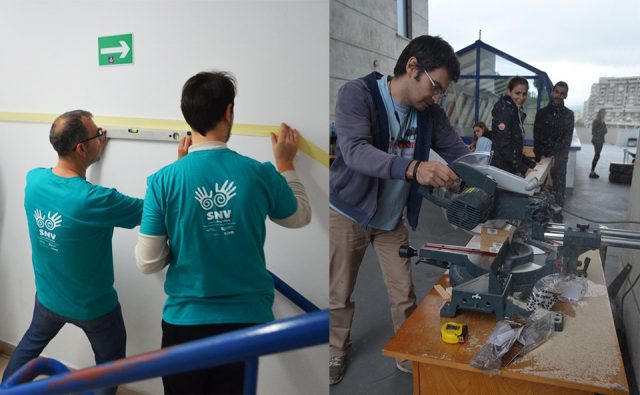
The National Volunteering Week 2014 (13th edition) will take place between May 12-18 2014. At the end of the month of March we will launch the online form for you to join the national calendar of events. Follow us on Facebook and www.voluntariat.ro/snv for updates!
The NVW is an annual national event which mobilizes as many organizations and their volunteers as possible, in order to celebrate volunteering, attract community support and publicly recognize volunteerism.
Grundtvig Workshop “ALPHABET OF VOLUNTEERING” on the development of tailored volunteer programs for literacy education, capacitating volunteers working with illiterate beneficiaries and promotion of literacy through volunteering programs with the aim of building the competencies of various practitioners involved in adult education, in order to enable them to develop tailored volunteering programs aimed at reducing illiteracy rates in communities across Europe. (more…)
In summer 2013 the partnership consisting of volunteer centres and volunteer involving organisations from eight European countries started to implement the VTI Project – Volunteering as a Tool for Inclusion. The overall aim of this project is to increase the social inclusion of disadvantaged and marginalised groups through volunteering in partner countries and to share already existing experience/practices/tools in the field.
Project partners:
brīvprātīgais.lv, Latvia
Centro di Servizi per il volontariato Idea Solidale, Italy
Frivilligcentre og Selvhjælp Danmark (FriSe)
ÖKA – National Volunteer Centre, Hungary
Platform of Volunteer Centres and Organizations, Slovakia
EU Aid Volunteers is an initiative of the European Commission based on The Lisbon Treaty and implemented by DG ECHO with the aim of offering international volunteering opportunities to EU citizens to be able to get involved in humanitarian aid and civil protection activities around the globe. From 2011, DG ECHO financed a number of pilot projects implemented by agencies and NGOs with the aim of testing and validating different mechanisms through which a large European volunteering program could be implemented starting with 2015. Pro Vobis participated, as a partner of VSO International and VSO Netherlands, in 2 such project pilots, between 2012 and 2015.
The “Eu Aid Volunteers Building in Resilience” pilot project was implemented between August 2013 and January 2015 by VSO International (UK) in partnership with VSO Netherlands (NL) and Pro Vobis (Romania), having also Oxfam India, Care India and Sphere as associate partners. A number of 17 experts were recruited, trained and deployed as short and long-term volunteers (up to 9 months) in The Philippines, India and Pakistan, and a number of over 900 staff members from local beneficiary communities have been trained and mentored. The work of the EUAV volunteers was focused on building the disaster risk reduction (DRR), disaster management (DM) and climate change adaptation (CCA) planning and coordinating capacity of local communities, local civil society organisations and networks and national planning and research agencies.
In India, the project worked with vulnerable rural communities in the states of Assam, Odisha and Jharkhand. In Pakistan, the action worked to strengthen key strategic networks in disaster preparedness and response, targeting the lack of coordination between departments and agencies. In the Philippines, EU Aid Volunteers workd on building the capacity of the Department of Science and Technology’s (DOST) to implement the National Operational Assessment of Hazards (NOAH) programme launched in 2012 to enable flood warning. Indirect beneficiaries were 200,000 community members in the target areas in India, Pakistan and the Philippines who are enabled to better anticipate, minimise and absorb potential stresses and shocks of diasters, through adaptation or resilience.
Pro Vobis was directly involved in:
promoting volunteering opportunities;
training the 17 EUAV volunteers in Practical Skills and Tools for Community Volunteer Management, to enable them to support the mentoring/consultancy program;
implementing a mentoring/consultancy program where 7 European experts in Volunteer and Volunteer Program Managament, 5 from Romania (Cosmin Catana, Cristian Babutau, Ioana Bere, Nicoleta Chis-Racolta and Oana Ticle) and 2 from the UK (Violeta Vajda and Evelyn Rodrigues) offered consultancy to 5 organisations in Pakistan (Humahung Forum, Peace Foundation, Gorakh Foundation, EHD Pakistan and Rescue 1122), 1 organisation in India (Pravah) and 1 in The Philippines (GVSP), to enable them to initiate and develop their community volunteering programs in DRR;
making recommendations to DG ECHO for future initiatives.
Multisectorial mechanisms at community level – the way forward for harnessing the power of volunteering is a general purpose grant from C.S. Mott Foundation that supported our work for the period 2013-2014.
Overall aim: Developing innovative multisectorial mechanisms at community level between relevant stakeholders that can have a positive and sustainable impact on volunteerism.
Objectives for the 2013-2014 grant period:
(1) To increase the involvement in and recognition of volunteering by companies as a tool for investing in the community and for fulfilling their business needs.
Developing tailored services and resources for companies, as well as developing innovative collaborative mechanisms between companies and other stakeholders that have an impact on the development and sustainability of volunteering initiatives at community level.
(2) To increase the recognition of volunteerism by public institutions at local and national level, and increase their support for volunteering as a resource for social development.
Advocacy, information, resources and services tailored to public institutions.
(3) To capacitate practitioners in the field of volunteering to pursue professional development and develop collaborative mechanisms among themselves and at community level.
Training and facilitation of networking and sharing of experience.
(4) To enable VIOs to efficiently harness volunteer skills and other community resources needed for quality volunteering programs, with a focus on innovation and sustainability.
Developing tailored services, resources, and facilitating collaboration between various stakeholders.
(1) To promote active, wide and correct mass-media coverage of the volunteerism movement.
Generating attractive stories, publishing materials, and gathering journalists at specific events that have potential of generating news about volunteering initiatives.
(2) To strengthen the organisational, financial and image capital of Pro Vobis needed for increasing the impact and sustainability of its actions.
In order to increase its overall capacity to positively influence volunteerism, Pro Vobis seeks to position itself as a service provider for various stakeholders that have an impact on the development and sustainability of volunteerism, to attract community funds and expertise to support its strategy, and to continuously develop its staff.




 The “Eu Aid Volunteers Building in Resilience” pilot project was implemented between August 2013 and January 2015 by VSO International (UK) in partnership with VSO Netherlands (NL) and Pro Vobis (Romania), having also Oxfam India, Care India and Sphere as associate partners. A number of 17 experts were recruited, trained and deployed as short and long-term volunteers (up to 9 months) in The Philippines, India and Pakistan, and a number of over 900 staff members from local beneficiary communities have been trained and mentored. The work of the EUAV volunteers was focused on building the disaster risk reduction (DRR), disaster management (DM) and climate change adaptation (CCA) planning and coordinating capacity of local communities, local civil society organisations and networks and national planning and research agencies.